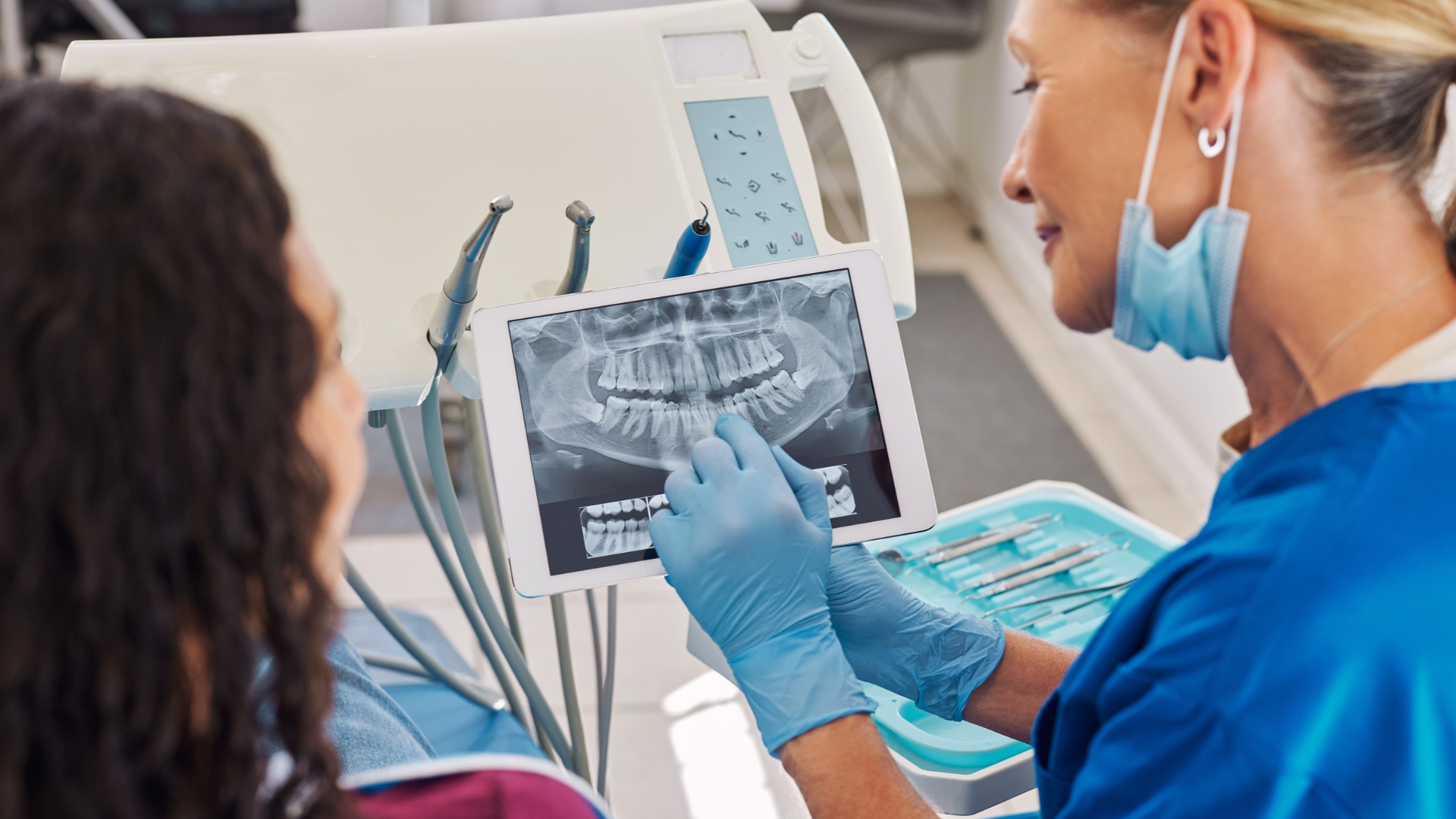
In healthcare, consolidation is reaching segments that remain highly fragmented. Dental prosthetics, a national market valued at €1.5 billion, offers a clear illustration. Imports, digitalisation and regulation are reshaping the value of businesses, for sellers and acquirers alike.
Healthcare funding being restructured, dental care consolidating
Three decrees dated 21 August 2026 were published to strengthen the long-term sustainability of the healthcare system and enable the French national health insurance scheme to fund the most essential, innovative and costly care and products. One of them, applicable from 1 January 2027, increases the contribution of supplementary health insurers to the cover of dental care. Combinations are even reaching the flows that fund care, as illustrated by 3Pay’s acquisition of the third-party payment platform MoneyTrack in November 2026.
In a study published in June 2026, the consultancy Heligan Group describes a European dental market that remains highly fragmented, from clinics to laboratories and distribution, and anticipates an acceleration of consolidation as financing conditions improve. Among laboratories, regional players are acquiring local businesses, while international operators are targeting emerging regional leaders. Acquirers now favour operational integration and margin improvement.
A value chain driven by the practitioner
The dental surgeon prescribes the prosthesis and purchases it from the manufacturer of their choice. They then invoice it to the patient together with the fitting procedure, on the basis of a mandatory quote stating the origin of the device. Since the 100% Santé reform, prostheses fall into three baskets, two of which are subject to price caps.
Two parliamentary questions published in 2026 note that an imported prosthesis is funded on the same terms as one manufactured in France. One of them cites, for a ceramic crown, a production cost of €15 in China compared with €120 in a French laboratory. Yet the national health insurance scheme applies a reimbursement base of €120 for a crown, exactly the French manufacturing cost and eight times the Chinese cost.
The UNPPD estimates that more than 30% of the prostheses used in France come from China.
Supply split between three business models
A written question published in July 2026 reports nearly 800 closures out of 3,800 laboratories in two years, and 3,000 redundancies out of 18,000 employees. French groups are building networks, such as Minlay, which has more than 400 employees in France, Germany, the Netherlands and Belgium.
The third model is that of international industrial producers. Listed in Hong Kong and present in France through Labocast, Modern Dental Group manufactures in China, Thailand and Vietnam. In the first half of 2026, its revenue grew by 10.8% and its EBITDA by 22.8%, representing a margin of 27.6%. Europe is its largest market, accounting for 53.8% of its revenue, and its growth there is driven in particular by digital removable prostheses. Its Asian sites processed around 627,800 digital cases, up 29.2%, an increase the group attributes to its clients’ adoption of intraoral scanners.
The intraoral scanner replaces the physical impression with a digital file, which can be sent online to the laboratory chosen by the practitioner, with no physical shipment.
Combinations, laboratories’ response to competitive pressure
In July 2026, Chronos Dental integrated the Di Paolo laboratory in Saint-Étienne, which has just under twenty employees, and the Philippe Buisson laboratory in Dardilly, which has around fifteen, highlighting the synergies between its businesses while preserving the identity of each. In Spain, AIVORIQ, owned by Alantra Private Equity, announced two new acquisitions in June 2026. The group brings together more than 20 laboratories, with revenue of close to €40 million, around €2 million per laboratory on average, and is targeting around thirty. The owners of the acquired laboratories have reinvested in AIVORIQ and remain involved in the project.
The MDR, a compliance issue at the heart of acquisition due diligence
European Regulation 2017/745, known as the MDR, requires manufacturers of custom-made devices, the category to which dental prostheses belong, to apply the procedure set out in its Annex XIII, to draw up a statement before placing any device on the market and to have a person responsible for regulatory compliance. A crown is classified as class IIa under the regulation. Only class III implantable custom-made devices also require a notified body. The conformity of a crown therefore rests solely on its manufacturer’s statement, including when the manufacturer is established outside the European Union. In that case, it must appoint a single authorised representative, and the importer may only place conforming devices on the market.
In the absence of a certificate issued by a third party, only the laboratory’s documentation allows an acquirer to verify its compliance. European guidelines also specify that the obligation relating to the person responsible applies at the level of each legal manufacturer. Where acquired laboratories retain their legal structure, compliance must therefore be verified entity by entity. The revision proposal presented by the European Commission on 16 December 2025 would require SMEs only to have access to such a person.
Developments that call for advance preparation
The UNPPD estimates that, without protective measures and support for reshoring, half of the prostheses fitted will come from abroad by 2030.
For a business leader considering a sale, three indicators should be documented in advance: the share of activity generated in the price-capped baskets, the share of orders received as digital impressions and the compliance documentation of each entity.
These indicators shape both the preparation of a sale and the analysis of a target. AURIS Finance, an M&A advisory firm dedicated to SMEs and mid-sized companies, supports business leaders in the healthcare sector in preparing and conducting their sale, industrial partnership and external growth transactions.