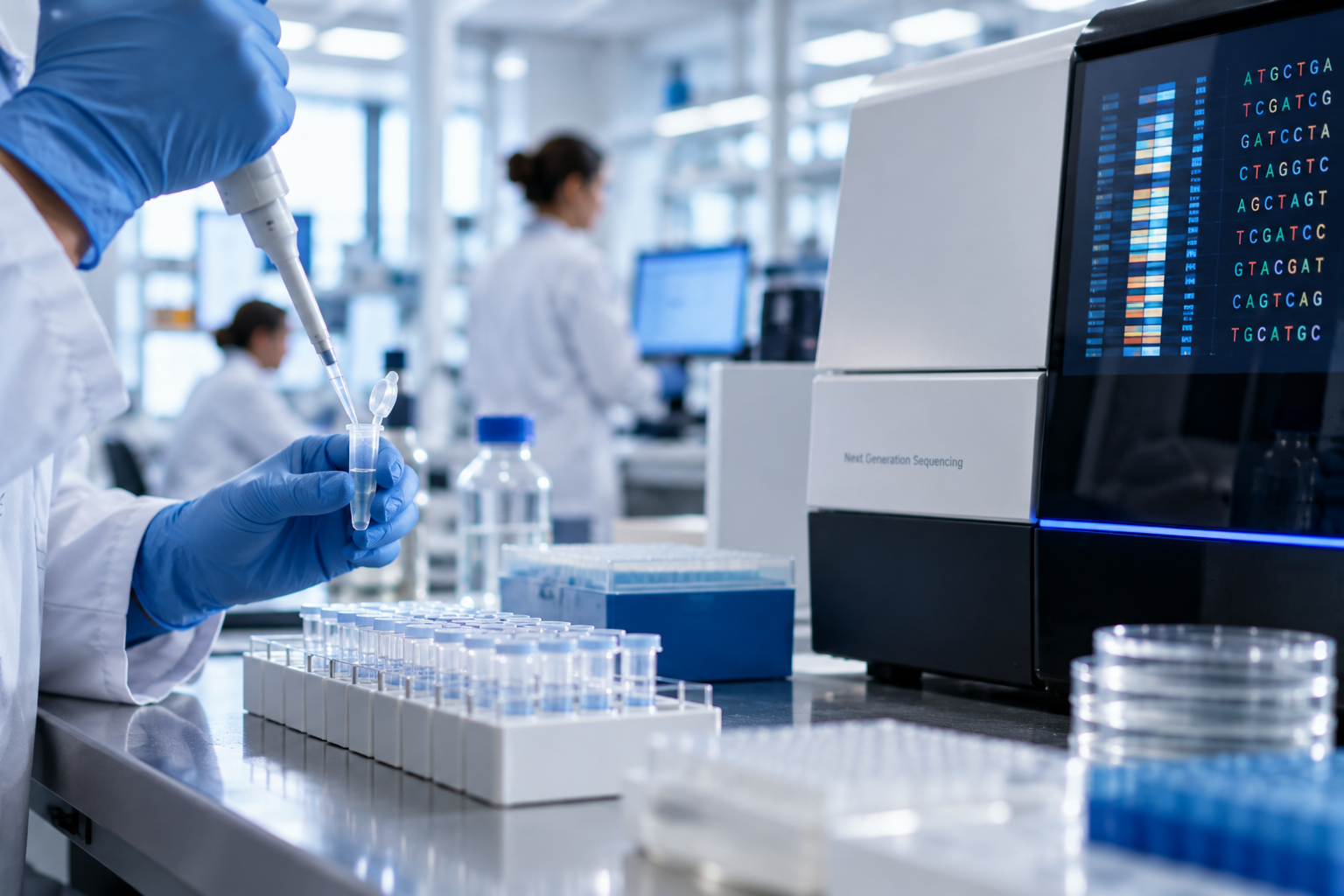
Clean Cells, a Montaigu-Vendée-based company specialising in quality control for biopharmaceutical products and a subsidiary of the Clean Biologics group, has announced the acquisition of Xegen. Based in Gémenos, in the Bouches-du-Rhône, Xegen specialises in the analysis and interpretation of next-generation sequencing data. The transaction supports Clean Cells’ launch of a sequencing-based viral safety testing offering for viral vectors and recombinant products. Julien Paganini, co-founder and head of Xegen, joins the company with two colleagues as expert project manager in bioinformatics, analytical method development and validation.
Analysis by the experts at Auris Finance, M&A and corporate finance advisory firm.
Xegen is part of a tightly paced series of acquisitions. In June 2026, Clean Cells acquired Stem Genomics, a specialist in stem cell quality control based in Montpellier and in Durham, North Carolina. In July, the company pursued its external growth strategy with Anaquant, a Lyon-based SME specialising in mass spectrometry bioanalysis. Clean Cells is backed by ArchiMed, a healthcare-focused investment fund and the company’s majority shareholder.
The model consists of adding targeted expertise, carried by small teams, to an existing quality control platform. Each target brings a distinct analytical capability, broadening the testing portfolio through the successive addition of technological building blocks.
Bioinformatics, a critical link in sequencing
Next-generation sequencing generates considerable volumes of data. Using this data in a regulated environment requires validated, version-controlled and traceable processing pipelines, as raw sequences alone do not constitute a result acceptable to the authorities. Xegen provides precisely this interpretation capability.
Laurent Claisse, Chief Executive Officer of Clean Cells, presents the transaction as a means of consolidating and securing the company’s bioinformatics capabilities across all sequencing methods, and of mastering the most technically complex stage of the process. The Vendée-based provider now claims stronger control of the entire chain, from sample to interpreted result, and an integrated offering ranging from identification to viral safety for its international client base.
A regulatory framework favourable to sequencing
The timing of the transaction coincides with a change in standards. The ICH Q5A(R2) guideline and chapter 2.6.41 of the European Pharmacopoeia recognise sequencing as a method for detecting adventitious viruses in biological products. This recognition addresses a practical difficulty: for viral matrices, conventional assays reach their limits when no antiserum is available.
Clean Cells states that the extension of its validated method to master and working cell banks is under way, alongside the strengthening of its viral safety expertise and its business development resources. For a small organisation, integration into a platform with laboratory infrastructure and established regulatory know-how opens up a broader scope for deployment. The transaction shows that targeted technological expertise, aligned with an increasingly stringent regulatory requirement, has its place in a consolidation strategy led by a specialist investor.
Our experts at your side
Auris Finance supports business leaders in their M&A and corporate finance transactions.
Are you considering a fundraising, an industrial partnership or a sale in the biotechnology sector? Our teams are available to support you.