Hexalean, an industrial group based in the Ain department specialised in metal processing, has announced the acquisition of the Phea group, which brings together Fayolle, Berlier and Dubois. The deal completes the group’s value chain, which now covers everything from design through to finished sub-assemblies, ready to be integrated.
Analysis by the experts at Auris Finance, advisors in mergers, acquisitions and financial engineering.
The deal comes on the back of a fast-paced acquisition strategy for the Ain-based group. In April 2025, it had already completed the takeover of Jura-based Guyot Jacquand, a specialist in cutting and stamping with 22 employees and 3.3 million euros of revenue, followed in early 2026 by Reims-based SteelDécoupe, also with 22 employees. With three companies integrated in one move and consolidated revenue lifted to 60 million euros, the Phea acquisition marks a clear step up in scale compared with previous deals.
Three complementary entities, a single value chain
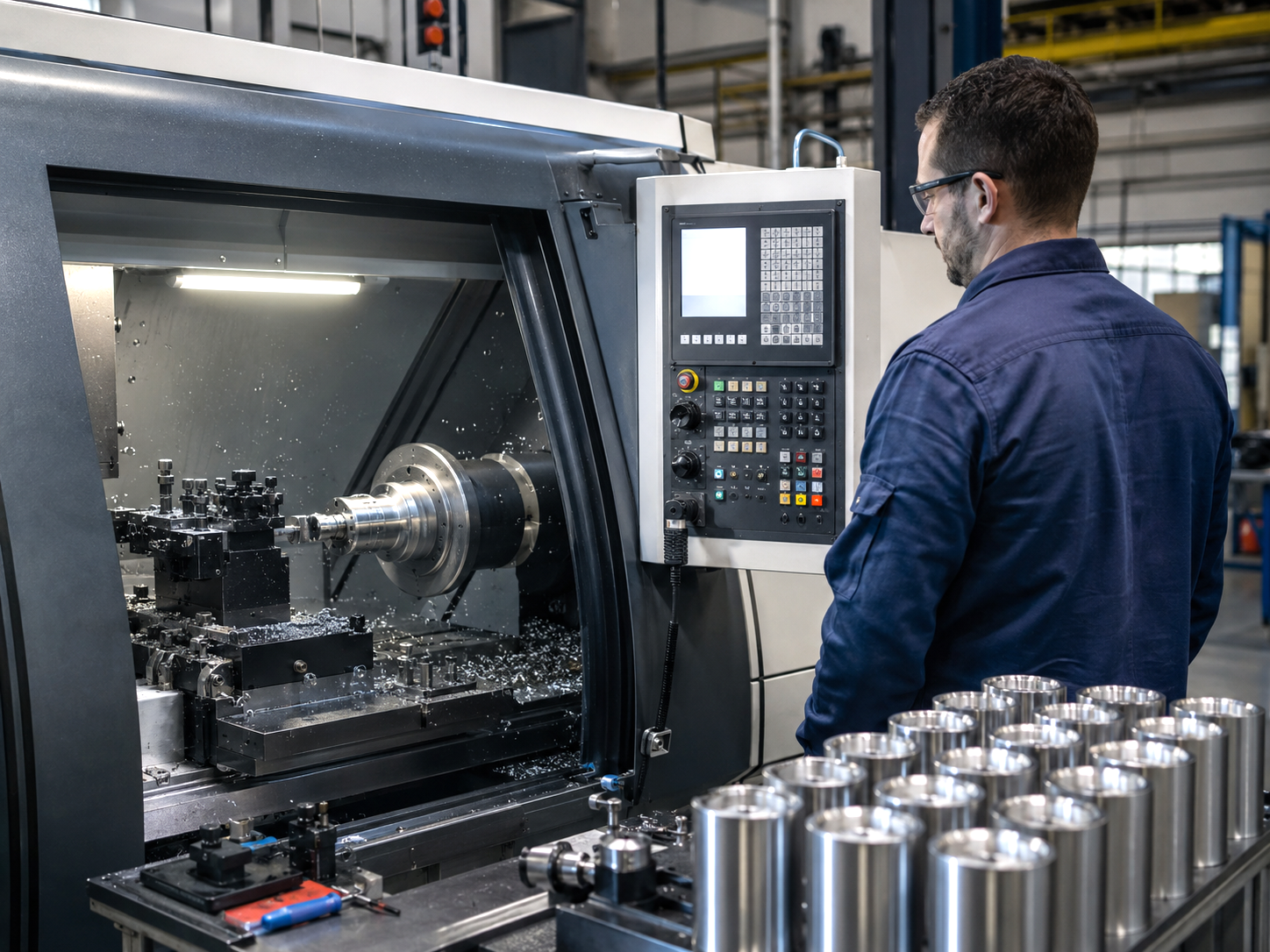
Based in Yssingeaux, in the Haute-Loire department, the Phea group brings together three companies built up through successive acquisitions since 2013: Fayolle, a specialist in thin sheet metalworking and boilermaking; Berlier, positioned in technical boilermaking and complex custom projects in Saint-Paul-en-Jarez; and Dubois, an expert in tube working in Saint-Maurice-de-Lignon. This structure, built around complementary trades rather than simply adding capacity, largely explains why the target caught Hexalean’s eye: each Phea company fills a specific capability gap in the Ain-based group’s offering, 2D laser cutting and five-axis robotic welding at Fayolle, custom projects at Berlier, and tube laser cutting and CNC bending at Dubois.
A deal driven as much by scale as by diversification
Born in 2016 from the combination of several Ain-based companies, including CO2, Laten, PPC Industrie and ACS, Hexalean has been led from Confrançon, in the Ain, by Damien Vuillod, and is built on a one-stop-shop model for its clients, rather than a network of specialist providers. With Phea now integrated, the group has 12 companies and more than 350 employees, with 20% of its revenue generated from exports.
Beyond the sheer scale effect, the deal also serves a sector diversification objective. Hexalean’s historical markets, agricultural machinery and construction equipment, have been declining since 2024 and are exposed to intensifying international competition. Phea brings exposure to markets that were previously little covered by the group, defence, nuclear, rail, medical and special machinery, all of which offer more favourable momentum and less cyclicality.
A cross-selling model that amplifies each acquisition
Hexalean’s one-stop-shop logic rests on a cross-selling mechanism between its subsidiaries that is already well tested: more than half of the group’s revenue now comes from clients working with at least two of its companies. With the integration of Phea, the group’s client portfolio rises from 600 to more than 900 accounts, a base on which cross-selling should continue to bear fruit in the years ahead.
A growth path that plans for a pause after Phea
Hexalean has also opened a sales office in Cologne, Germany, this year, alongside its long-standing Swiss market, with the goal of lifting the share of revenue generated from exports from 20% to 30% by 2027. The group is targeting revenue of 66 million euros by the end of 2027, and 80 million euros by 2029-2030, while announcing that it plans to pause its external growth strategy from late 2026 and through 2027, in order to consolidate its recent acquisitions, of which Phea is the most transformational to date.
Our experts by your side
Auris Finance supports executives in their mergers, acquisitions and corporate finance transactions.
Are you considering a fundraising round, an industrial partnership or a sale in the metalworking sector? Our teams are at your disposal to support you.